
Planning a Weekend Break in a National Park
Why seals come ashore
Seals are not fish, and they are not permanently at sea. They haul out on rocky shores, sandy beaches and remote islands to rest, digest, moult, give birth and nurse their young. A seal on land is doing something essential, and it needs to do it without interruption. Every time a seal lifts its head because a walker has appeared on the skyline, it loses precious energy it should be saving for foraging, staying warm or feeding a pup.
In the UK we are lucky enough to see two species regularly: the grey seal, which pups in autumn and winter, and the common seal, also called the harbour seal, which pups in summer. Both are protected by law, and both are far more sensitive to human presence than they look. Understanding why they are on shore is the first step to watching them well.
The three golden rules of seal watching
- Keep quiet. Sound travels further than you think across open water and sand. Voices, barking dogs and the clatter of walking poles can spook an entire colony. Whisper, or better still, say nothing at all.
- Stay high on the shore. A cliff path, a headland or a raised dune is perfect. Seals feel safer when you are above them and far away. If you can see their heads lift as one, you are already too close. Aim for at least 100 metres, and use binoculars or a zoom lens rather than creeping nearer.
- Never corner a seal. Always leave a clear escape route to the water. If a seal is between you and the sea, back away slowly and quietly. Do not walk between a seal and its pup, and never stand between a group of seals and the open water.
These three rules cover almost every situation. They are simple, but they matter enormously to the animals you have come to see.
Pups are not abandoned — but they are vulnerable
A white-coated grey seal pup on its own is not necessarily orphaned. Its mother will often leave it for hours while she feeds at sea, returning to nurse it under cover of darkness or when the shore is quiet. If you approach, you may scare the mother away for good, and a pup that is handled or surrounded by people can be deserted. Never touch a pup, never try to feed it, and never let a dog near it.
If you genuinely believe a pup is in trouble — for example, if it is injured or has been alone for more than 24 hours — move well away and contact a local wildlife trust or a marine mammal rescue charity. Do not attempt a rescue yourself. Seals have a powerful bite and can carry infections that are dangerous to humans.
How to read the signs of disturbance
Seals are wonderfully expressive once you know what to look for. A relaxed seal will often lie flat, close its eyes or roll on its side. A disturbed seal will do the opposite. Watch for heads rising in unison, animals shuffling towards the water, or a sudden rush — sometimes called a stampede — into the sea. Mothers may plunge into the water and abandon a pup if they feel threatened.
If you see any of these behaviours, you are the cause. Stop moving, turn away from the shoreline and retrace your steps. Do not wait to take one more photograph. The best seal watchers accept that a quiet retreat is a successful encounter.
Choosing a responsible viewpoint
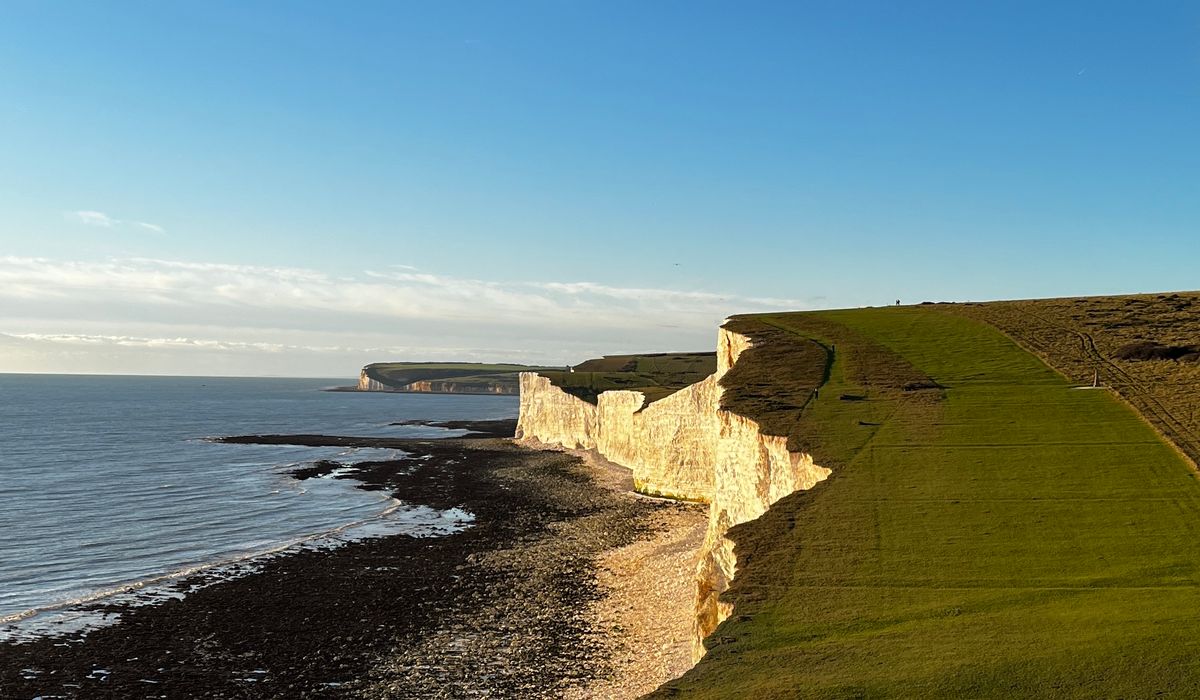
Some of the finest coastal walks in the UK offer safe, distant views of hauled-out seals. Look for cliff-top paths, old coastguard lookouts, headlands and raised beaches where you can sit behind a wall, rock or dune and watch without being seen. Early morning and late evening are often quieter, but seals can be alert at any time, especially during pupping and moulting seasons.
Stay on marked paths, keep to the landward side of any fence or hedge, and avoid descending onto beaches where seals are resting. If a beach is closed or signed as a seal sanctuary, respect it — those signs exist for a reason. A telescope or a pair of 8x42 binoculars will reward you with far better views than any close approach ever could.
Walks that work for seals and you
Plan your walk around the tides. Seals often haul out on sandbanks and rocky outcrops that disappear at high water, and you do not want to be cut off while trying to keep your distance. Carry a map, check local tide tables and tell someone where you are going.
Dogs are wonderful walking companions, but they are the single biggest cause of seal disturbance on UK shores. Keep dogs on a short lead near any coastline where seals might be present, and never let them swim towards a hauled-out group. Take all litter home, including food waste, and never feed a seal — handouts encourage them to approach people, which puts both species at risk.
Finally, lead by example. If you see someone moving too close, a quiet word about the pups or the law is often enough. Responsible seal watching is not about staying away; it is about being curious, patient and kind. From a high, quiet viewpoint, you will see more, learn more and leave the seals exactly as you found them.
LEAVE A COMMENT